The Cover StoryStories in Stone, part 1 of 8
Toi et moi: the two-stone ring, from 1796 to now
Two days before he left Paris to command an army, a young general married a widow with a ring that would not choose one stone over another. This is that ring’s story, what “you and me” looks like on a hand, and how to choose a pair of your own.
A wedding set for eight o’clock
On the evening of 9 March 1796, a wedding was set for eight o’clock at 3 rue d’Antin in Paris, a house then serving as the town hall of the city’s second district. The bride, a widow of thirty-two, waited. The groom arrived more than two hours late. He was General Napoleon Bonaparte, twenty-six years old and newly appointed to command the Army of Italy, and he had too much work to leave it behind, even on his wedding night.
The certificate they signed is remembered for two small kindnesses. His age was raised by eighteen months and hers was lowered by four years, so that on paper the six years between them all but disappeared. Two days later, on 11 March, he left Paris for his army.
She had gone by Rose for most of her life. Bonaparte was the first to call her Joséphine, and it is the name history kept. He had also given her a ring.
Two stones, and neither one the centre
It was not a grand ring. It held two pear-shaped stones, a mined diamond and a dark blue sapphire, each of about one carat, set side by side on a slim gold band in the style the French call toi et moi: you and me.
The idea is simple, and that is where its force comes from. Most engagement rings are built as a hierarchy: one large stone at the top of the circle, smaller ones in attendance. A toi et moi refuses to rank. Two stones sit together, close enough to touch, and each keeps its own shape and colour. In Bonaparte’s ring the white stone and the blue one were cut to the same outline: two different materials, telling one story.
A toi et moi refuses to rank. Two stones sit together, close enough to touch, and each keeps its own shape and colour.
The price of a sentence
The marriage did not last; it was dissolved within fourteen years. The ring outlived it, and outlived the empire. On 24 March 2013, in the year that marked 250 years since Joséphine’s birth, it was offered by the Osenat auction house in Fontainebleau, near Paris, with an estimate of €10,000 to €15,000. The hammer fell at €730,000, about US$949,000, nearly fifty times the top of the estimate.
Two stones of about a carat each cannot explain a figure like that. What the bidders were paying for was the sentence the ring had carried for more than two centuries: not “me”, but “you and me”.
How two stones talk to each other
Every toi et moi begins with one question: should the two stones match, or answer each other? There is no wrong answer, but there are three good ones.
Matched
The same shape and size, as in Bonaparte’s two pears.
Related
Two soft shapes of different sizes: an oval with a smaller pear.
Contrasting
A straight-edged cut beside a curved one: an emerald cut with a heart.
- Matched. The same shape and the same size. The ring reads as a pair of equals, and it is the calmest of the three.
- Related. Two soft shapes of different sizes. The larger stone leads and the smaller one answers, the way two voices share a tune.
- Contrasting. A straight-edged cut beside a curved one. The geometry does the talking, and it suits someone who likes a piece to be noticed. Our guide to oval, emerald, pear and radiant shapes explains how each one carries light.
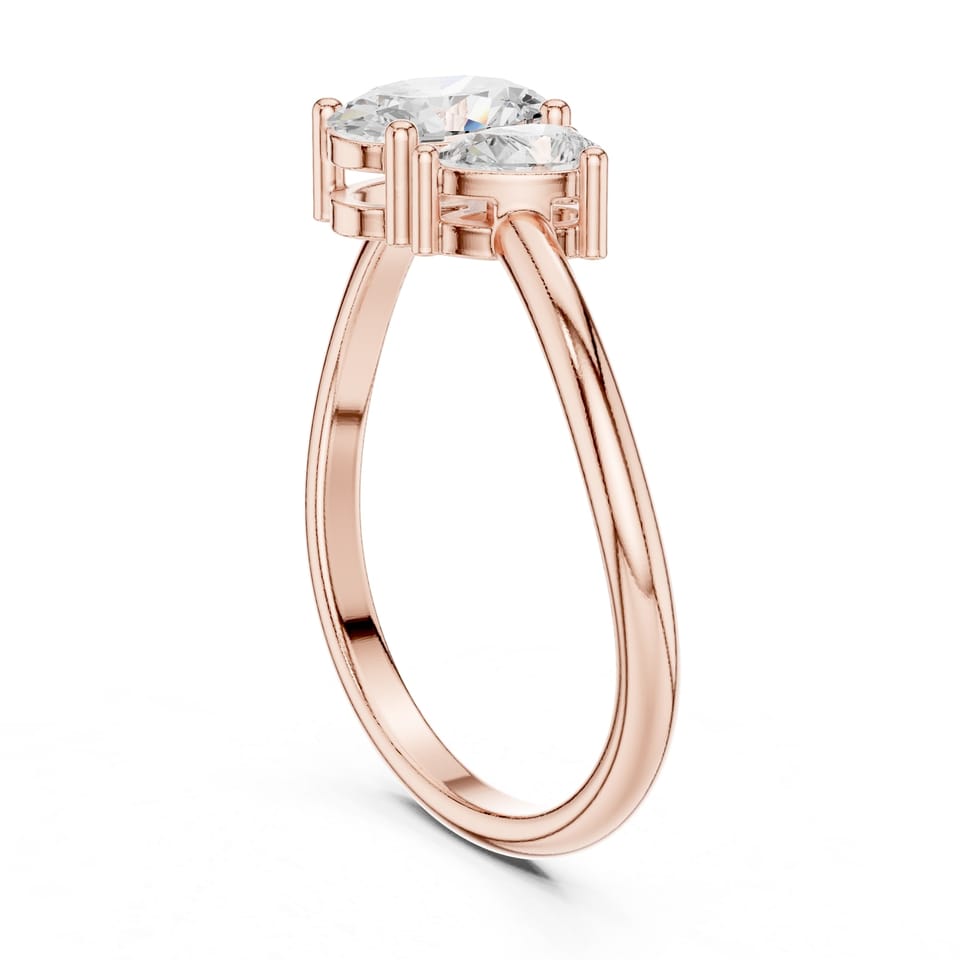
Three practical points matter more than the theory. First, two stones sit wider across the finger than one stone of the same total weight, so look at the pair from above before you settle on a size. Second, the band. Many toi et moi rings use a bypass shank, where the two ends of the band slide past each other instead of meeting under a single stone, so each stone sits at the end of its own sweep of metal. Both rings shown here are made this way, and our guide to settings shows how claws hold a stone at its edge.
Third, read the weight carefully. In our piece names, “ct total” means every stone together, and “ct” on its own means the largest stone.
Surat, today
Three pairs from our bench
Each of these is drawn in CAD, made to order in our workshop in Surat in about 15 days, and photographed before it ships to you. Each can be made in silver with a rhodium or gold plating, or in 9K, 10K, 14K or 18K gold in yellow, white or rose, set with laboratory-grown diamonds or with moissanite, which is a different stone and not a diamond. If you are weighing the two, our guide to laboratory-grown diamond or moissanite sets out the differences. The figures below come from each design’s CAD.
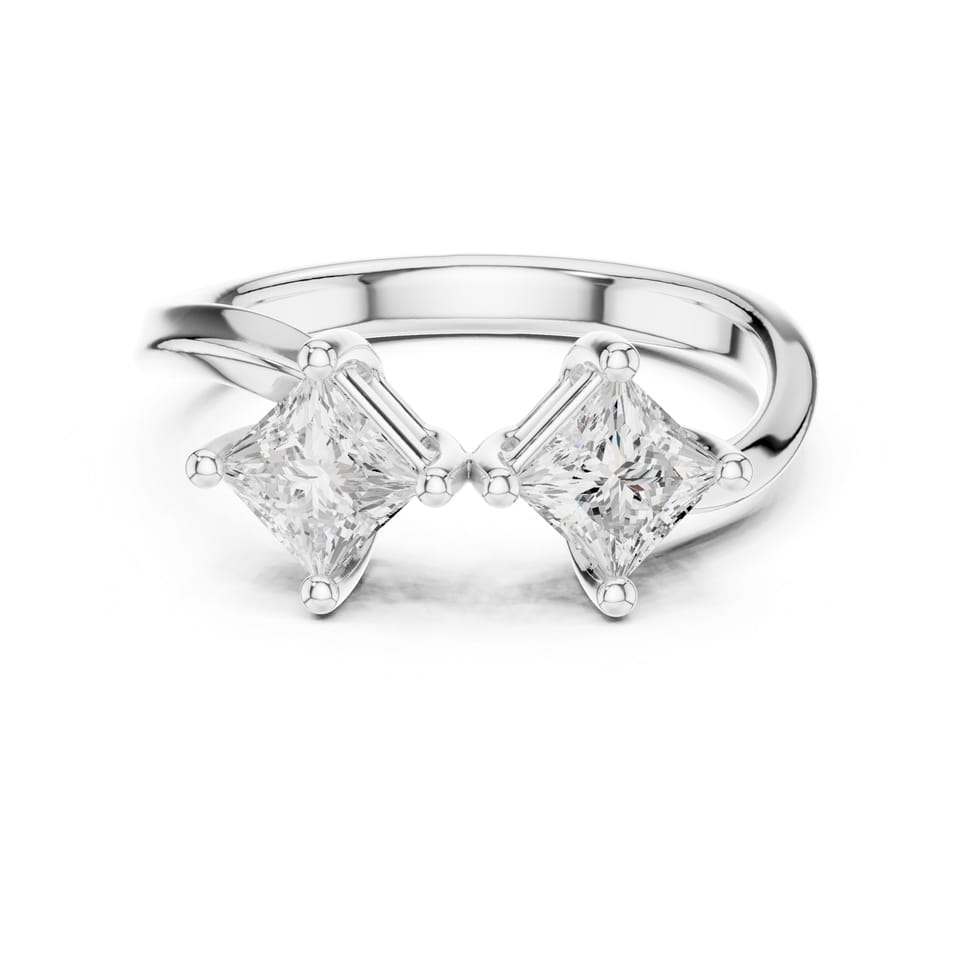
Princess Laboratory-Grown Diamond Toi et Moi Engagement Ring, 0.87 ct total
Two princess cuts turned on their points, so they meet corner to corner.
- Stones
- 2 princess cuts, 4.30 × 4.30 mm, about 0.87 ct together
- Setting
- Claw-set pair on a bypass shank
- Gold
- About 2.53 g in 9K, from the CAD
- Size
- US 6.5 (16.9 mm inside). Other sizes made on request, quoted separately
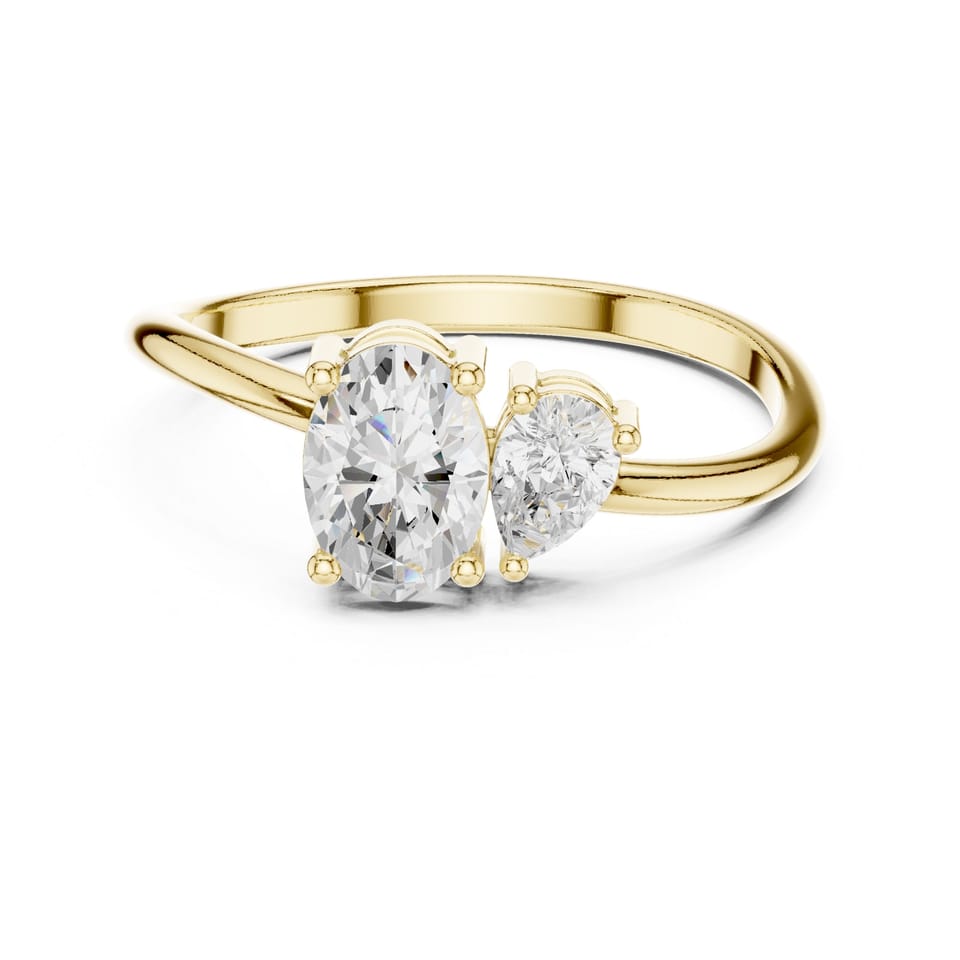
Oval and Pear Laboratory-Grown Diamond Toi et Moi Engagement Ring, 0.50 ct
The closest of the three to Bonaparte’s ring: it keeps the pear.
- Stones
- 1 oval, 6.50 × 4.50 mm; 1 pear, 4.50 × 3.00 mm, about 0.65 ct together
- Setting
- Claw-set pair on a bypass shank
- Gold
- About 1.28 g in 9K, from the CAD
- Size
- US 6.5 (16.9 mm inside). Other sizes made on request, quoted separately
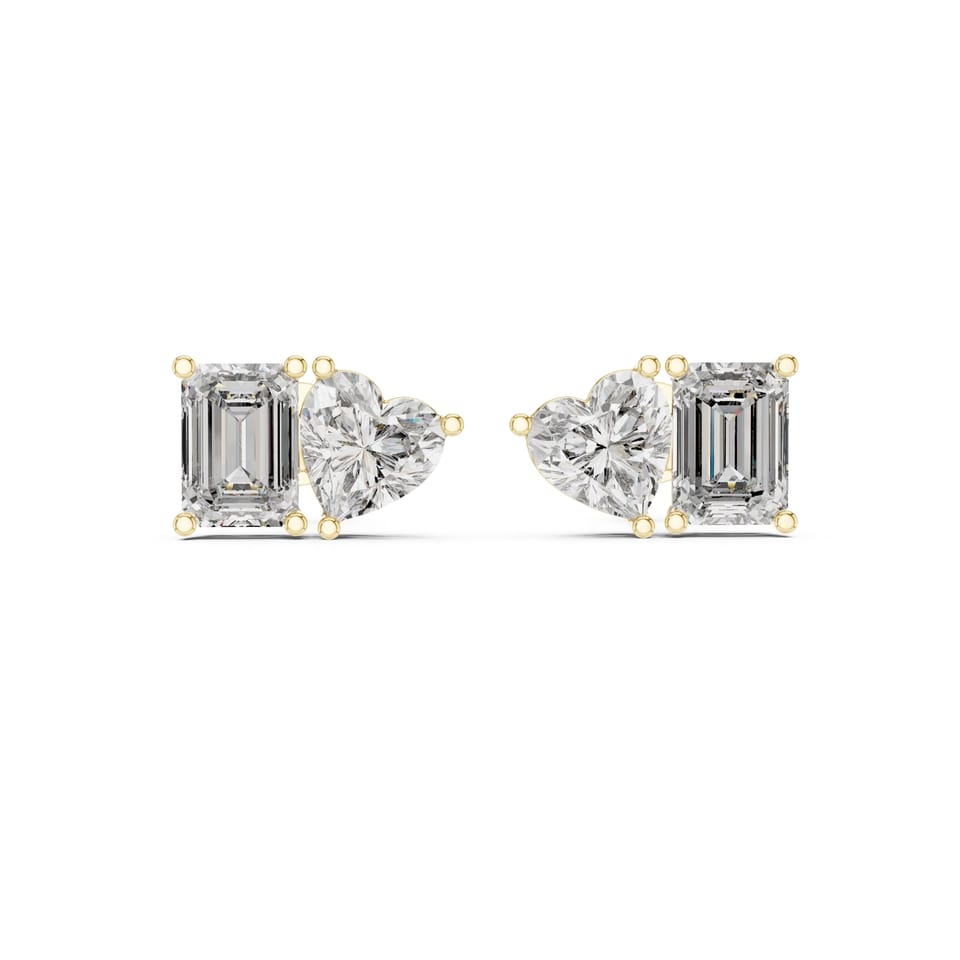
Laboratory-Grown Diamond Toi et Moi Stud Earrings, 4.00 ct total
The same idea on both ears: an emerald cut beside a heart, made as a mirrored pair.
- Stones
- 2 hearts, 6.50 × 6.50 mm; 2 emerald cuts, 7.00 × 5.00 mm, about 4.00 ct for the pair: on each earring, an emerald cut beside a heart
- Setting
- Claw-set pair
- Gold
- About 2.33 g in 9K for the pair, from the CAD
- Sold as
- A pair
Each piece is made to order in about 15 days, photographed when it is finished, and the photograph sent to you before it ships. Delivery is free within India; abroad it is a flat ₹7,500 with duties included. You can cancel free within 12 hours of ordering, and return a piece within 7 days of delivery, unworn and with its tag still attached; return shipping is yours to pay.
Pictures are renders made from each design’s CAD. Your own piece is photographed at the bench before it ships, so you see exactly what is coming.
If none of these is yours
Perhaps your two stones are an oval and an emerald cut, or two pears like Joséphine’s. Tell us the shapes you have in mind and the metal you would wear every day. We will tell you plainly what can be made, and we agree the design, size, stones, price and making time with you in writing before anything is made. Here is how made to order works, step by step.
If it is to be an engagement ring, two things help before you write: your size, which you can measure at home in two minutes, and a look at our engagement rings for the settings you like.
Next in Stories in Stone
Part 2 · Thursday 22 OctoberDhanteras: why gold is bought on the thirteenth day
On the thirteenth day of the waning moon before Diwali, many families bring home gold or silver. Where the custom comes from: a physician of the gods with a jug of nectar, a lamp lit for Yama, and a goddess welcomed in with gold.
The eight parts of Stories in StoneFrom the Journal
Back to Stories
Quick answers
- What does toi et moi mean?
- It is French for “you and me”. In jewellery it means two stones set side by side as equals, usually on a ring, instead of one centre stone. The two can match or contrast in shape and size.
- What was Napoleon’s engagement ring for Joséphine?
- A toi et moi from 1796: a pear-shaped mined diamond and a pear-shaped dark blue sapphire, each of about one carat, on a slim gold band. It sold at the Osenat auction house in Fontainebleau on 24 March 2013 for €730,000 (about US$949,000), against an estimate of €10,000 to €15,000.
- Do the two stones in a toi et moi have to match?
- No. They can be the same shape and size, two related shapes such as an oval and a pear, or a contrast such as an emerald cut and a heart. What matters is that they look chosen for each other, and that the pair sits at a comfortable width across your finger.
- Can a toi et moi be an engagement ring?
- Yes. Bonaparte’s was. The VIBHINI toi et moi rings shown here are made as engagement rings, with laboratory-grown diamonds or moissanite, priced in US ring size 6.5, with other sizes made on request and quoted separately.
Ask us
Thinking of a pair of your own?
Write to us on WhatsApp, by email or through the enquiry form. Tell us the two shapes you have in mind. On WhatsApp the message opens already written, naming this story, so you only need to add your idea.
Monday to Saturday, 10am to 7pm India time. WhatsApp +91 70434 07831.
Buying for a shop or brand? See our trade terms · Trade WhatsApp +91 84607 61366
Sources
Nikunj Koshiya, Co-founder. Nikunj Koshiya and his brother Vishrut founded VIBHINI on 14 November 2025, building on three generations of their family’s manufacturing in Surat. Nikunj looks after sales and customer care.
- BNP Paribas History, “Bonaparte and Josephine tie the knot at n°3 rue d’Antin”: the date, time and place of the wedding, the groom’s late arrival, and the ages on the certificate. histoire.bnpparibas
- Napoléon & Empire, “Napoleonic timeline of 1796”: the marriage on 9 March at the town hall of the 2nd arrondissement, rue d’Antin, and the departure for the army on 11 March. napoleon-empire.org
- Wikipedia, “Napoleon”: born 15 August 1769; the civil marriage of 9 March 1796. en.wikipedia.org
- Wikipedia, “Joséphine de Beauharnais”: born 23 June 1763; known as Rose; Bonaparte the first to call her Joséphine; the divorce. en.wikipedia.org
- The World (PRI), “Napoleon and Josephine engagement ring sells at auction for $949,000”, 24 March 2013: the sale at Osenat in Fontainebleau, two pear-shaped stones of about one carat each, set in gold. theworld.org
- The Jewellery Editor, “Napoleon and Josephine’s engagement ring sells for almost US$1 million”: the dark blue sapphire, the pear shapes, the “you and me” setting on a slim gold band, the €10,000–15,000 estimate and a price of US$949,000. thejewelleryeditor.com
- Associated Press, 24 March 2013, as carried by Artfix Daily: the winning bid of 730,000 euros, more than US$948,000. artfixdaily.com
- VIBHINI design records for VR262008, VR262019 and VE262019: stone shapes, sizes and weights, settings and metal weights, read from each design’s CAD.
Every date and figure in this story comes from the sources above. If you know of a better one, tell us and we will check it. Facts checked 8 October 2026.